
Exploring the realm of Top electric car charging technologies explained, this introduction sets the stage for a deep dive into the intricacies of cutting-edge advancements in the electric vehicle industry.
From the evolution of charging standards to the revolution of wireless charging technology, this overview will shed light on the future of transportation as we know it.
Overview of Electric Car Charging Technologies
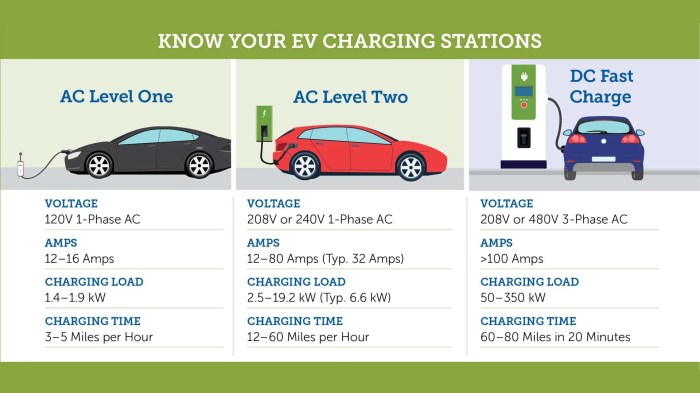
Electric car charging technologies play a crucial role in the automotive industry as the world shifts towards sustainable transportation options. These technologies enable electric vehicles to recharge their batteries efficiently, promoting the adoption of electric cars and reducing reliance on fossil fuels.
Types of Electric Car Charging Technologies
- Level 1 Charging: This involves plugging the vehicle into a standard 120-volt outlet and is the slowest method of charging.
- Level 2 Charging: Utilizing a 240-volt outlet, this charging option is faster than Level 1 and is commonly found in residential and public charging stations.
- DC Fast Charging: Also known as Level 3 charging, this technology allows for rapid charging at high-voltage DC stations, significantly reducing charging times.
Advancements Shaping the Future of Transportation
Electric car charging technologies are continuously evolving, leading to innovations such as wireless charging, vehicle-to-grid integration, and smart charging systems. These advancements are making electric vehicles more convenient, efficient, and accessible, paving the way for a greener and sustainable future of transportation.
Plug-in Electric Vehicle (PEV) Charging Standards
Electric vehicle charging standards play a crucial role in ensuring interoperability and convenience for electric vehicle owners. Let's explore the most common plug-in electric vehicle charging standards globally and compare their features.
CHAdeMO
CHAdeMO is a fast charging standard primarily used by Japanese and Korean automakers. It uses a unique plug design and has been widely adopted for fast charging stations around the world.
CCS (Combined Charging System)
CCS is a standard developed by the Society of Automotive Engineers (SAE) and is endorsed by most North American and European automakers. It combines the AC and DC charging into a single plug, allowing for both slow and fast charging capabilities.
Type 2
Type 2, also known as Mennekes, is a European charging standard that supports both single-phase and three-phase charging. It is commonly used for slower AC charging at home or public charging stations.The choice of charging standard can impact the availability of charging stations and the convenience for electric vehicle owners.
While CHAdeMO is prevalent in Asia, CCS is more common in North America and Europe. Type 2 is widely used for slower charging options in Europe.Overall, interoperability between these standards is crucial to ensure electric vehicle owners can access charging stations regardless of the standard used.
As the electric vehicle market continues to grow, efforts to standardize charging infrastructure will be essential for the widespread adoption of electric vehicles.
Wireless Electric Vehicle Charging
Wireless Electric Vehicle Charging is an innovative technology that enables electric vehicles to charge without the need for physical cables or plugs. This technology works by transferring power wirelessly from a charging pad on the ground to a receiver pad on the vehicle, using electromagnetic induction.
Benefits of Wireless Electric Vehicle Charging
- Convenience: Wireless charging eliminates the need to plug in cables, making it easier for EV owners to charge their vehicles.
- Safety: Without exposed cables, there is reduced risk of tripping or electrical hazards.
- Efficiency: Wireless charging can be automated, allowing for more seamless charging experiences.
Challenges of Wireless Electric Vehicle Charging
- Efficiency Loss: Wireless charging systems may have lower efficiency compared to traditional wired charging.
- Cost: The initial cost of implementing wireless charging infrastructure can be higher than traditional charging stations.
- Compatibility: Standardization of wireless charging technology is still evolving, leading to compatibility issues among different systems.
Companies and Projects in Wireless EV Charging
-
WiTricity:
A leading company in wireless charging technology, WiTricity is developing solutions for electric vehicle charging without cables.
-
Qualcomm Halo:
Qualcomm's wireless electric vehicle charging technology aims to provide efficient and convenient charging solutions for EV owners.
-
Bosch:
Bosch is also working on wireless charging systems for electric vehicles, focusing on enhancing the user experience and efficiency of charging.
Fast Charging Technologies
Fast charging technologies play a crucial role in the widespread adoption of electric vehicles by addressing concerns about charging speed and convenience. With advancements in this area, electric vehicle owners can now charge their vehicles quickly and efficiently, making it more practical to use electric cars for daily commuting and long-distance travel.
Tesla Superchargers
Tesla Superchargers are a proprietary fast charging technology developed by Tesla Motors specifically for their electric vehicles. These chargers are capable of delivering high power levels to Tesla vehicles, allowing them to charge significantly faster compared to standard charging stations.
Tesla Superchargers are strategically located along popular routes to enable long-distance travel and reduce charging times for Tesla owners.
CHAdeMO
CHAdeMO is a fast charging technology commonly used by electric vehicles from Japanese manufacturers such as Nissan and Mitsubishi. This charging standard allows for high-power DC fast charging, enabling compatible vehicles to charge quickly at CHAdeMO-equipped stations. While not as widely adopted as other standards like CCS, CHAdeMO remains a popular choice for electric vehicle owners, especially in regions where it is well-supported.
CCS
Combined Charging System (CCS) is a fast charging standard developed by a consortium of automotive manufacturers. CCS combines the capability for both AC and DC charging, making it versatile and suitable for a wide range of electric vehicles. With CCS fast charging stations becoming more prevalent, electric vehicle owners can benefit from faster charging speeds and greater convenience when on the road.
CCS is gaining popularity in Europe and North America as more automakers embrace this standard for their electric vehicles.
Final Summary
In conclusion, the landscape of electric car charging technologies is rapidly evolving, paving the way for a more sustainable and efficient mode of transportation. By understanding the nuances of these technologies, we can embrace a greener future with open arms.
Q&A
What are the different types of electric car charging technologies available?
There are primarily three types: Level 1, Level 2, and DC Fast Charging.
How do fast charging technologies like Tesla Superchargers differ from CHAdeMO and CCS?
Tesla Superchargers are proprietary to Tesla vehicles, while CHAdeMO and CCS are more widely used standards.
Are there any drawbacks to wireless electric vehicle charging?
One challenge is the efficiency loss compared to wired charging, but advancements are being made to address this issue.